
Transferring a Flat After a Member's Death: A Nominee and Succession Guide for RWA Committees
A nominee named in society records is not automatically the new owner, and committees that treat the two as the same thing end up in the middle of family disputes. What the society is actually required to do, and what to keep on record either way.
Why this catches committees off guard
A member's death is not something a committee can prepare a standard checklist for the way it can for an AGM or a resale NOC — it arrives without notice, is usually raised by a grieving family member, and involves emotionally difficult conversations layered on top of a paperwork question the committee did not expect to have to answer. The single most common mistake is treating the person named as "nominee" in the society's records as the flat's new legal owner. They are not, and acting as though they are is what turns a routine administrative transfer into a family dispute the committee is now stuck in the middle of.
Nominee vs legal heir: the distinction that causes most disputes
A nomination filed with the society names someone to receive the shares and the flat's membership on the member's death, but courts have been consistent that this does not, by itself, transfer ownership. The nominee's role is closer to a trustee or custodian: someone who holds the membership and is responsible for dealing with the society, while the actual legal right to the property is decided separately under succession law — by a will, or by the applicable inheritance law where the deceased left no will. A society that transfers a share certificate to a nominee is not deciding who inherits the flat; it is simply recognising who the society will deal with administratively until the real legal heirs are established, whether that is the same person or not.
What the society is actually required to do
- If a valid nomination is on file, transfer the membership and share certificate to the named nominee in the society's own records, on production of the death certificate — this is an administrative step, not a ruling on ownership
- Record clearly, in the transfer entry itself, that the nominee holds the membership as a trustee for the legal heirs pending a final settlement, so the society's own paperwork does not later read as if it decided an ownership question it has no authority to decide
- Where no nomination was filed, ask for documents that establish who the legal heirs are — a legal heir certificate, a probated will, a succession certificate, or a registered family settlement — before transferring the membership to any of them
- Where the heirs disagree among themselves about who should hold the membership, decline to transfer to any one person unilaterally and ask the family to resolve it through a succession certificate or a court order instead of picking a side
Documents committees typically ask for
- The member's death certificate
- The nomination form on file with the society, if one exists, along with proof of identity for the named nominee
- Where there is no nomination, or the heirs contest it: a legal heir certificate from the revenue authority, a probated will, a succession certificate, or a notarised family settlement signed by all heirs
- A no-objection letter from other legal heirs where the transfer is being made to one heir on the family's own agreement, rather than through a court document
- Confirmation that maintenance dues on the flat are current, the same check the society would run for any other transfer
Where committees go wrong
- Treating the nominee as the automatic new owner and updating billing, voting rights, and the share certificate in their name alone, without any reference to the legal heirs
- Refusing to transfer the membership to the nominee at all, insisting on a succession certificate even where the nomination is valid and no heir has raised an objection — this is over-caution the law does not require and mainly just delays a family that is already dealing with a loss
- Getting drawn into an active family dispute over inheritance and trying to decide, informally, who the "real" owner should be — that decision belongs to the family and, if contested, the courts, not the managing committee
- No dated record of what documents were received and when the transfer entry was made, which becomes a problem if the transfer is ever questioned later
- Losing track of maintenance billing and voting rights during the transition, so notices and bills keep going to the deceased member's name for months after the family has already informed the office
What a clean succession transfer needs on record
- A dated log of when the death certificate and other documents were received, and when the membership transfer entry was actually made
- A transfer entry that states plainly whether it was made to a nominee (pending final legal settlement) or to confirmed legal heirs, so the basis for the decision is clear if it is ever revisited
- Copies of every supporting document — nomination form, legal heir certificate, succession certificate, or family settlement — retained in the society's own file, not only with the family
- Updated billing and contact records as soon as the transfer entry is made, so maintenance notices and AGM communication reach the right person without a lag
How MySocietyEntry helps
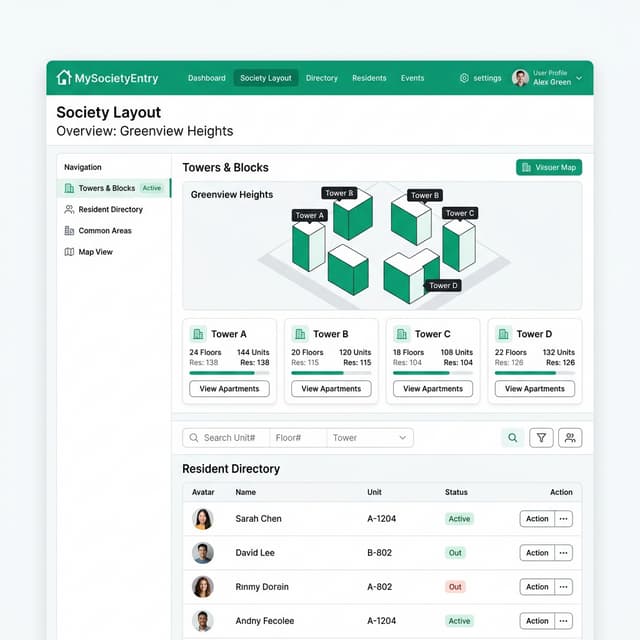
MySocietyEntry keeps each flat's member history, nomination records, and transfer entries in one continuously updated record rather than scattered across old registers and individual committee members' memory. When a succession transfer does come up, the office has the flat's dues status, prior member and nominee details, and a place to log the new transfer entry with its supporting documents — all in the same system residents, treasurers, and the next committee will actually look at.
Final takeaway
A nomination tells a society who to deal with when a member dies — it does not settle who inherits the flat, and a committee that confuses the two ends up making a family's legal dispute its own problem. Transferring membership to a valid nominee promptly, while keeping the paperwork clear that this is administrative rather than a decision on ownership, and asking for proper succession documents when there is no nomination or the heirs disagree, keeps the society doing its actual job: recognising the right person to deal with, on a record it can produce if anyone ever asks.
See It In Action
Explore Society Management Software
MySocietyEntry helps committees turn guidance like this into a working process instead of another spreadsheet.
Society Management Software