
Corpus Fund for Housing Societies: What It Is and How to Manage It
What a corpus fund actually is, how it differs from a sinking fund and the maintenance fund, what builders are expected to hand over at possession, and how RWAs should track it.
What a corpus fund actually is
A corpus fund is a one-time, non-refundable contribution that becomes part of a housing society's permanent capital reserve. It is not something residents pay every month, and it is not meant to be spent on routine expenses. Once collected, it stays with the society as long-term capital, separate from the funds that keep the building running day to day.
That single distinction — one-time and permanent, versus recurring and spendable — is where most confusion about the corpus fund starts.
Corpus fund vs sinking fund vs maintenance fund
Committees often use these three terms loosely, but they serve different purposes:
- **Maintenance fund**: monthly collections that cover recurring running costs — staff salaries, housekeeping, utilities, and day-to-day upkeep
- **Sinking fund**: ongoing contributions set aside specifically for major, non-recurring structural work — reconstruction, waterproofing, lift replacement, or repainting
- **Corpus fund**: a one-time capital reserve, usually collected at possession or society formation, that is not meant to be drawn down for routine or even major repair spending in the same way a sinking fund is
In practice, many societies eventually transfer their corpus fund into the sinking fund once the society is fully formed and both are earmarked for the same category of major, infrequent expense. That transfer should be a deliberate, minuted decision, not something that happens by default because the two funds were never tracked separately in the first place.
Where the corpus fund comes from
- **Builder handover**: developers are generally expected to hand over a corpus fund to the RWA or cooperative society at the time of possession or when the society is registered, though the exact amount and timing depend on the state's regulations and the specific agreement signed with buyers
- **Transfer premium on resale**: in some states, societies are permitted to charge a capped premium when a flat changes hands, which can be credited to the corpus or reserve fund. Maharashtra's model bye-laws, for example, cap this transfer premium at ₹25,000 — societies should check their own state's cooperative society act and bye-laws rather than assume a figure that applies elsewhere
- **One-time member contributions**: some societies raise an additional lump-sum corpus contribution from members directly, usually approved through a general body resolution
Common problems RWAs run into
- The builder never hands over a corpus fund at all, or hands over a token amount with no supporting documentation
- Corpus fund and sinking fund contributions sit in the same ledger head, so nobody can say with confidence what the corpus balance actually is
- Corpus money gets used to plug a shortfall in monthly maintenance collections, quietly eroding a reserve that was meant to be permanent
- There is no committee or general body resolution on file authorizing how or when the corpus fund can be used
- Per-flat contribution records are incomplete, which creates disputes when a flat is resold and a member expects an accounting of what was paid in
What to verify during a builder-to-society handover
- Ask for the corpus fund amount in writing as part of the handover documents, along with proof that it has actually been transferred into a society-operated bank account
- Do not accept a corpus fund that stays parked in an account still controlled by the builder or the builder's facility management agency
- Confirm whether any interest earned on the corpus fund before handover has also been passed on to the society
- Get the opening corpus balance ratified at a general body meeting so it is on record from day one, rather than surfacing as a dispute years later
How to manage a corpus fund properly
- Keep it in a separate ledger head and, ideally, a separate bank account or fixed deposit from the maintenance fund and sinking fund
- Require a committee or general body resolution before any amount is drawn from it, and record the specific purpose approved
- Publish periodic statements showing the corpus balance to residents, so it is not a figure only the treasurer can quote from memory
- Maintain flat-wise contribution records where relevant, especially where corpus was collected incrementally rather than as a single builder handover amount
- Invest idle corpus funds in line with what the society's bye-laws permit, rather than letting a large balance sit in a non-interest-bearing account indefinitely
How MySocietyEntry helps
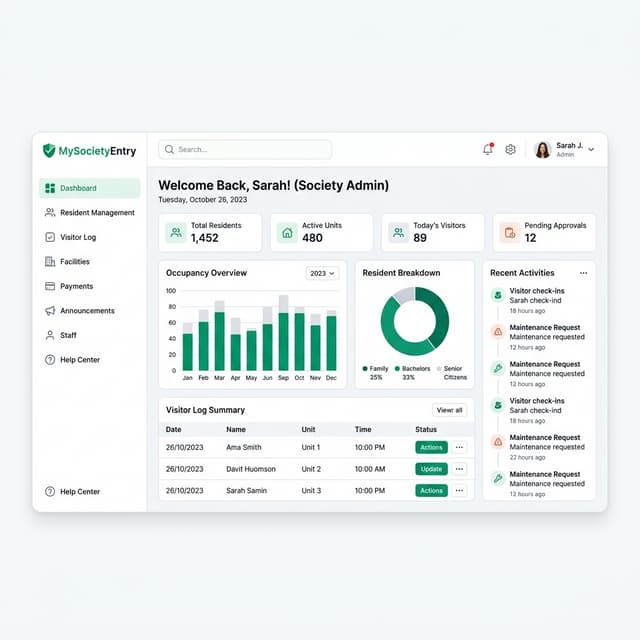
MySocietyEntry's accounting module keeps the corpus fund on its own ledger, separate from maintenance billing and sinking fund contributions, so the committee always has an accurate, auditable balance to show residents, auditors, or an incoming committee at handover. Approvals and fund movements stay logged against the resolution that authorized them, instead of living only in a meeting register.
Final takeaway
A corpus fund only does its job if it is treated as permanent capital from day one — tracked separately, protected from routine spending, and backed by documentation that survives a change in committee or a builder handover. Societies that blur it with maintenance or sinking fund collections usually only notice the gap when a resale, an audit, or a major repair forces the question of exactly how much reserve the society actually has.
See It In Action
Explore Society Accounting Software
MySocietyEntry helps committees turn guidance like this into a working process instead of another spreadsheet.
Society Accounting Software