
Sinking Fund for Housing Societies: A Practical RWA Guide
What a sinking fund is, how much a society should set aside, common mistakes RWAs make, and how to track contributions without losing visibility into the corpus.
What a sinking fund actually covers
A sinking fund is money a housing society sets aside over time for major, non-recurring structural expenses, things like reconstruction, waterproofing, lift replacement, or repainting the building exterior. It is separate from the monthly maintenance fund, which covers day-to-day running costs like staff salaries, housekeeping, and utilities.
Committees sometimes blur the two, using sinking fund money to plug maintenance shortfalls. That is exactly the mistake that leaves societies short of cash when a real structural expense comes up.
Why RWAs need a dedicated sinking fund
- Buildings age, and major repairs are expensive when they arrive all at once
- Collecting a large one-time special levy is harder than saving gradually
- Lenders, insurers, and buyers increasingly expect to see a funded reserve
- Outgoing members cannot claim back their sinking fund contribution, so it stays with the society as long-term capital
How much should a society set aside
There is no single number that fits every state, but many housing society bye-laws use construction cost as the base. Maharashtra's model bye-laws, for example, set a minimum sinking fund contribution of 0.25% per annum of each flat's construction cost (as certified by the society's architect, excluding land cost). Societies in other states should check their own cooperative society act and model bye-laws, since the minimum percentage and calculation basis can differ.
Whatever the statutory minimum is, committees should treat it as a floor, not a target. Older buildings, buildings with lifts, or buildings due for major repairs in the next few years often need a higher contribution rate to stay ahead of the actual repair cost.
Common mistakes RWAs make
- Collecting a flat token amount that has no relationship to actual repair costs
- Mixing sinking fund and maintenance fund in the same ledger head
- Not increasing the contribution rate as the building ages
- Failing to invest the accumulated corpus in accordance with the society's bye-laws
- Losing track of how much each flat has contributed over the years, which creates disputes during resale
How to track a sinking fund properly
- Keep the sinking fund in a separate ledger head, ideally a separate bank account
- Record contributions flat-wise so the accumulated balance per unit is always auditable
- Reconcile the fund against bank statements every month, not just at year-end
- Share periodic corpus fund statements with residents so contributions stay transparent
- Document any withdrawal against a specific reconstruction or major repair approval
How MySocietyEntry helps
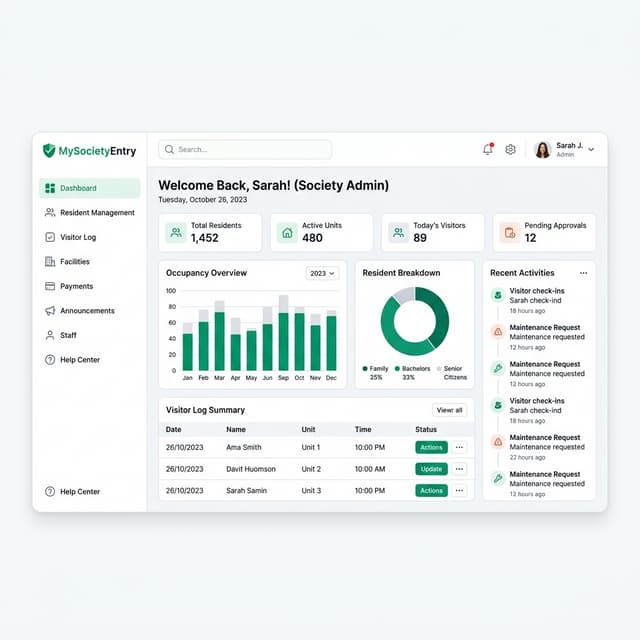
MySocietyEntry's accounting module keeps sinking fund contributions on a separate ledger from regular maintenance billing, with flat-wise tracking so the committee always knows the accumulated balance and can generate audit-ready reports when residents or auditors ask for them.
Final takeaway
A sinking fund only works if it is funded consistently, tracked separately from day-to-day maintenance, and reviewed periodically against the building's actual repair timeline. Getting the ledger discipline right today is what prevents a painful special levy a few years from now.
See It In Action
Explore Society Accounting Software
MySocietyEntry helps committees turn guidance like this into a working process instead of another spreadsheet.
Society Accounting Software