
E-Waste and Battery Disposal for Housing Societies: What Committees Need to Know
Why handing old electronics and used batteries to a scrap dealer is not the same as compliant disposal, what the E-Waste and Battery Waste Rules actually expect, and how to set up a sensible collection process.
Why "the kabadiwala took it away" is not a disposal policy
Every housing society accumulates electronic waste and used batteries without really planning for it: a dead UPS or inverter battery from the lift room, an old CCTV DVR swapped out during a security upgrade, biometric attendance devices that stopped working, retired Wi-Fi routers and access control panels, and — increasingly — batteries and inverters from rooftop solar or EV charging setups reaching the end of their working life. The default handling for most of this is the same: it gets handed to whichever scrap dealer or informal collector offers to take it away, often for a small cash payment, with nobody asking where it actually ends up.
That habit predates a regulatory framework that now exists specifically to stop it. The E-Waste (Management) Rules and the separate Battery Waste Management Rules require electronic waste and used batteries to be channelled to registered producers, refurbishers, or authorised recyclers — not informal scrap dealers who typically dismantle devices by hand, recover whatever metal has resale value, and dispose of the rest, including hazardous components, with no environmental safeguards at all. A society that has never thought about this isn't unusual, but it also isn't compliant, and the exposure grows every year as more common-area equipment reaches end of life.
Why this is a bigger issue for a society than it looks
- Common-area electronics accumulate steadily: CCTV systems, gate biometric devices, DG set control panels, Wi-Fi and networking equipment, and office computers all eventually get replaced, and each replacement generates e-waste someone has to deal with
- Batteries are a recurring, not one-time, category — UPS and inverter batteries have a limited life and get swapped every few years, and societies with rooftop solar or EV charging infrastructure now have additional battery banks and charging units to account for
- Old batteries and electronics contain heavy metals and hazardous materials that cause real environmental harm when dismantled informally, which is exactly what happens when they go to an unregistered scrap collector instead of an authorised recycler
- A society large enough to run its own DG sets, lifts, solar installation, and centralised security systems is generating far more of this waste than most committees realise, simply because nobody has ever added it up in one place
What the rules expect
- E-waste — covering a wide range of electronic and electrical equipment, including IT equipment, batteries-in-devices, and now solar photovoltaic modules — should be handed over only to a producer's authorised take-back system, a registered refurbisher, or a CPCB-authorised recycler or dismantler, not to an unregistered scrap dealer
- Used batteries fall under a separate framework, the Battery Waste Management Rules, which similarly requires waste batteries to be routed to registered recyclers or refurbishers rather than informally scrapped, since batteries in particular carry a real fire and contamination risk when broken open outside a controlled facility
- Entities that use large volumes of covered electronic equipment can qualify as "bulk consumers" under the e-waste rules, which brings additional recordkeeping and handover obligations — whether a specific society's common-area equipment crosses that threshold depends on the exact volumes involved, and a large multi-tower township is in a different position here than a standalone 40-flat building
- Manufacturers and producers of electronics and batteries carry their own Extended Producer Responsibility (EPR) obligations to collect and recycle a share of what they sell, which is precisely why an authorised take-back or collection channel usually exists for a society to hand devices back to in the first place, often at no cost
Where the exact obligations vary, and why a committee shouldn't assume
- Whether a specific society qualifies as a "bulk consumer" under the e-waste rules depends on the volume and category of equipment it uses in a financial year — this is worth confirming with a compliance professional rather than guessing, especially for larger townships with extensive common infrastructure
- Which local or authorised collection points and registered recyclers are available differs by city, and a producer's official take-back program (many electronics and battery brands now run one) is usually the simplest route rather than sourcing an authorised recycler independently
- Solar panel and EV charging equipment disposal is a newer, less commonly understood category even among vendors, so it is worth asking the original installer or supplier directly what their take-back or end-of-life process is before assuming none exists
Where societies commonly get this wrong
- Old electronics and dead batteries sold to a scrap dealer for a small payment, with no check on whether the buyer is an authorised recycler at all
- No single person or committee role responsible for e-waste and battery disposal, so it defaults to whichever staff member is clearing out a storeroom that week
- No record kept of what was disposed of, when, or through which channel, leaving the society with nothing to show if anyone ever asks
- Used batteries stored loosely in a maintenance room or basement for months while nobody arranges pickup, creating an avoidable fire and safety hazard in the meantime
- Assuming solar panels and EV charging batteries can be handled the "same as any other scrap" once they eventually need replacing, without checking the installer's or manufacturer's actual take-back terms
What a workable policy should cover
- A designated committee member or facility manager responsible for e-waste and battery disposal, so it isn't handled ad hoc by whoever happens to be present
- A short list of registered recyclers, refurbishers, or producer take-back programs the society will use, checked once and kept on file rather than re-decided every time something breaks
- A basic log of what was disposed of, the approximate quantity, the date, and which authorised channel it went through — enough to show a defensible pattern if it's ever questioned, without needing to be an elaborate register
- A safe, contained storage spot for batteries awaiting pickup, rather than leaving them loose in a basement or storeroom
- A one-time check with vendors for solar, EV charging, DG sets, and any large battery-backed system on what their end-of-life or take-back process actually is, filed alongside that vendor's other records
How MySocietyEntry helps
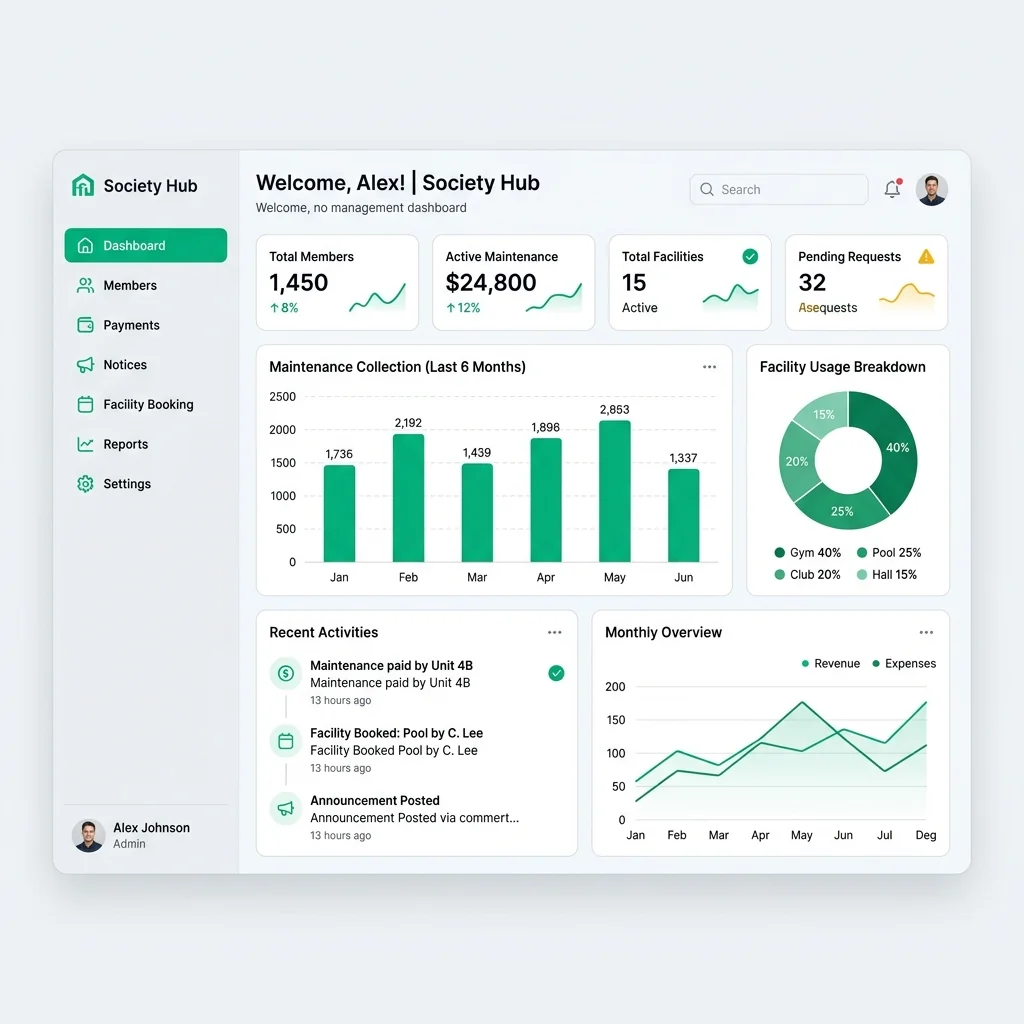
MySocietyEntry does not collect or recycle e-waste or batteries itself — that stays with the society's chosen recycler or take-back partner. Where the platform helps is in keeping the surrounding paperwork organised: a registered recycler or refurbisher can be added and tracked the same way any other society vendor is, disposal dates and quantities can be logged as part of that vendor's record instead of scattered across messages, and the same asset and equipment tracking a society already uses for common-area infrastructure makes it easier to notice when a DG set, biometric device, or battery bank is approaching end of life in the first place, rather than discovering it only after it has already failed.
Final takeaway
E-waste and battery disposal is one of the easiest compliance gaps for a committee to overlook, precisely because it doesn't happen on a fixed schedule the way an annual audit or AGM does — it happens in scattered, one-off moments whenever something finally breaks. A society that names someone responsible, keeps a short list of authorised recyclers on file, and logs what left the building and through which channel closes a real gap at very little ongoing effort, and avoids the environmental and reputational cost of having old electronics and batteries turn up in an informal scrapyard with the society's name still on them.
See It In Action
Explore Society Management Software
MySocietyEntry helps committees turn guidance like this into a working process instead of another spreadsheet.
Society Management Software